Insight
What Is Umbraco Compose? A marketer’s guide to simpler digital experiences
Umbraco have recently launched a new product called Umbraco Compose. This short blog aims to explain what it is, the benefits for using it and an example use case.
An Overview of Umbraco Compose
Modern marketing teams rely on a growing mix of tools: CMS, CRM, ecommerce platforms, PIMs, DAMs, analytics, and more. Each one plays a role in delivering great digital experiences but keeping them all in sync is often harder than it should be.
That is where Umbraco Compose comes in.
Umbraco Compose is a new product from Umbraco designed to bring data from multiple systems together, so websites, campaigns, and digital experiences stay consistent, fast, and future‑ready.
Behind the scenes, most digital experiences pull content and data from lots of different places. For example, product information, prices, images, content, and more.
Umbraco Compose acts as a central connection point that keeps everything aligned and organised.
Key Benefits of Umbraco Compose
One Clean Source of Truth for Your Digital Experience
Umbraco Compose brings data from different tools (CMS, ecommerce platform, product system, or asset library) into one structured, reliable layer.
Built for Multi‑Channel Marketing
Whether your content appears on a website, landing page, app, or future digital channel, Umbraco Compose ensures each one pulls from the same consistent data source.
Less Reliance on Developers for Everyday Changes
As an Umbraco agency, we know that one of the biggest pain points for marketing teams is waiting for developer time just to update structured data.
Umbraco Compose reduces the need for custom, one‑off integrations that typically slows teams down. This allows you to create your marketing campaigns at speed.
Ready for AI‑Powered Marketing
AI tools rely on clean, well‑structured data to work effectively. Umbraco Compose is designed with this in mind, making it easier to power search, personalisation, recommendations, and AI‑driven content workflows in the future.
An Example Use Case of Umbraco Compose
Umbraco Compose brings data together from multiple sources for use on websites, apps, and other digital applications. But what does that mean in practice? Below is an example use case.
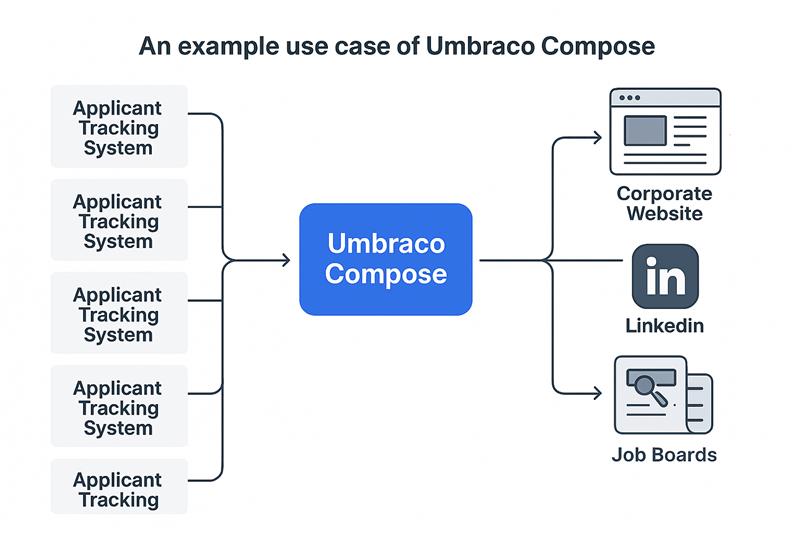
The client has a corporate website and would like to integrate jobs content on the website. The jobs content is held within an applicant tracking system (ATS). This is initially a simple integration. The jobs data is integrated with the website via the API connection from the ATS vendor. Brilliant, we have jobs showing on the website.
Everyone is happy. A curveball is thrown from the HR director. The other five business units in the group want their job data integrating into the corporate site. They all have separate applicant tracking systems with different connection methods. This is where Umbraco Compose comes into play. The data from the applicant tracking systems is aggregated into Umbraco Compose. This is then transformed into one data set and sent to the website.
All the jobs from six separate systems now have a stable and efficient method to be shown on the corporate website. And as a bonus, the job data held in Umbraco Compose is sent to LinkedIn and two other jobs boards to further the reach of the adverts.
Curious how Umbraco Compose could fit into your digital ecosystem?
Speak to our Umbraco specialists to explore what’s possible.